Sweden
Some figures reconciled across multiple sources via Civica's methodology (v0.2 BETA). Methodology →
 Sweden
⌘K
Overview
- Background
- A military power during the 17th century, Sweden maintained a policy of military non-alignment until it applied to join NATO in 2022. Sweden has not participated in any war for two centuries. Stockholm preserved an armed neutrality in both World Wars. Since then, Sweden has pursued a successful economic formula consisting of a capitalist system intermixed with substantial welfare elements. Sweden joined the EU in 1995, but the public rejected the introduction of the euro in a 2003 referendum. The share of Sweden’s population born abroad increased from 11.3% in 2000 to 20% in 2022.
Geography
Area
- Land
- 410,335 sq km
- Water
- 39,960 sq km
- Total
- 450,295 sq km
- Climate
- temperate in south with cold, cloudy winters and cool, partly cloudy summers; subarctic in north
- Terrain
- mostly flat or gently rolling lowlands; mountains in west
Land Use
- Other
- 23.8% (2023 est.)
- Forest
- 68.6% (2023 est.)
- Agricultural land
- 7.3% (2023 est.)
- Agricultural land: arable land
- arable land: 6.2% (2023 est.)
- Agricultural land: permanent crops
- permanent crops: 0% (2023 est.)
- Agricultural land: permanent pasture
- permanent pasture: 1.1% (2023 est.)
- Location
- Northern Europe, bordering the Baltic Sea, Gulf of Bothnia, Kattegat, and Skagerrak, between Finland and Norway
- Coastline
- 3,218 km
Elevation
- Lowest point
- reclaimed bay of Lake Hammarsjon, near Kristianstad -2.4 m
- Highest point
- Kebnekaise South 2,100 m
- Mean elevation
- 320 m
- Irrigated land
- 510 sq km (2016)
- Map references
- Europe
Land Boundaries
- Total
- 2,211 km
- Border countries
- Finland 545 km; Norway 1,666 km
Maritime Claims
- Territorial sea
- 12 nm (adjustments made to return a portion of straits to high seas)
- Continental shelf
- 200-m depth or to the depth of exploitation
- Exclusive economic zone
- agreed boundaries or midlines
- Natural hazards
- ice floes in the surrounding waters, especially in the Gulf of Bothnia, can interfere with maritime traffic
- Geography note
- strategic location along Danish Straits linking Baltic and North Seas; Sweden has almost 100,000 lakes, the largest of which, Vanern, is the third-largest in Europe
- Natural resources
- iron ore, copper, lead, zinc, gold, silver, tungsten, uranium, arsenic, feldspar, timber, hydropower
- Area comparative
- almost three times the size of Georgia; slightly larger than California
- Geographic coordinates
- 62 00 N, 15 00 E
- Population distribution
- most of the population lives in the south where the climate is milder and there is better connectivity to mainland Europe; population clusters are found along the Baltic coast in the east; the interior areas of the north remain sparsely populated
Major Lakes (Area Sq Km)
- Fresh water lake(s)
- Vanern - 5,580 sq km; Vattern - 1,910 sq km; Malaren - 1,140 sq km
People & Society
Languages
- Note
- note: Finnish, Sami, Romani, Yiddish, and Meankieli are official minority languages
- Languages
- Swedish (official)
- Major language sample(s)
The World Factbook, den obestridliga källan för grundläggande information. (Swedish)
The World Factbook, the indispensable source for basic information.
- Religions
- Church of Sweden (Lutheran) 53.9%, other (includes Roman Catholic, Orthodox, Baptist, Muslim, Jewish, and Buddhist) 8.9%, none or unspecified 37.2% (2021 est.)
Sex Ratio
- At birth
- 1.06 male(s)/female
- 0 14 years
- 1.06 male(s)/female
- 15 64 years
- 1.05 male(s)/female
- Total population
- 1.01 male(s)/female (2024 est.)
- 65 years and over
- 0.88 male(s)/female
- Birth rate
- 10.56 births/1,000 population (2025 est.)
- Death rate
- 9.63 deaths/1,000 population (2025 est.)
Median Age
- Male
- 40.1 years
- Total
- 41.2 years (2025 est.)
- Female
- 42.1 years
Population
- Male
- 5,360,755
- Total
- 10,643,745 (2025 est.)
- Female
- 5,282,990
Nationality
- Noun
- Swede(s)
- Adjective
- Swedish
Tobacco Use
- Male
- 25.8% (2025 est.)
- Total
- 19.9% (2025 est.)
- Female
- 13.9% (2025 est.)
Urbanization
- Urban population
- 88.7% of total population (2023)
- Rate of urbanization
- 0.89% annual rate of change (2020-25 est.)
Age Structure
- 0 14 years
- 17.1% (male 934,668/female 880,310)
- 15 64 years
- 62.1% (male 3,365,754/female 3,208,248)
- 65 years and over
- 20.8% (2024 est.) (male 1,032,279/female 1,168,576)
- Ethnic groups
- Swedish 79.6%, Syrian 1.9%, Iraqi 1.4%, Finnish 1.3%, other 15.8%
(2022 est.)
Dependency Ratios
- Total dependency ratio
- 60.9 (2025 est.)
- Youth dependency ratio
- 27.3 (2025 est.)
- Potential support ratio
- 3 (2025 est.)
- Elderly dependency ratio
- 33.6 (2025 est.)
- Physician density
- 4.41 physicians/1,000 population (2021)
Health Expenditure
- Health expenditure (as % of GDP)
- 10.7% of GDP (2022)
- Health expenditure (as % of national budget)
- 19% of national budget (2022 est.)
- Net migration rate
- 4.14 migrant(s)/1,000 population (2025 est.)
- Hospital bed density
- 2 beds/1,000 population (2020 est.)
- Total fertility rate
- 1.66 children born/woman (2025 est.)
Drinking Water Source
- Improved: rural
- rural: 99.6% of population (2022 est.)
- Improved: total
- total: 99.7% of population (2022 est.)
- Improved: urban
- urban: 99.8% of population (2022 est.)
- Unimproved: rural
- rural: 0.4% of population (2022 est.)
- Unimproved: total
- total: 0.3% of population (2022 est.)
- Unimproved: urban
- urban: 0.2% of population (2022 est.)
Education Expenditure
- Education expenditure (% GDP)
- 7.3% of GDP (2022 est.)
- Education expenditure (% national budget)
- 15.3% national budget (2022 est.)
Infant Mortality Rate
- Male
- 2.5 deaths/1,000 live births
- Total
- 2.2 deaths/1,000 live births (2025 est.)
- Female
- 2 deaths/1,000 live births
- Population growth rate
- 0.51% (2025 est.)
- Gross reproduction rate
- 0.8 (2025 est.)
- Population distribution
- most of the population lives in the south where the climate is milder and there is better connectivity to mainland Europe; population clusters are found along the Baltic coast in the east; the interior areas of the north remain sparsely populated
Life Expectancy at Birth
- Male
- 81.2 years
- Female
- 84.7 years
- Total population
- 82.9 years (2024 est.)
- Maternal mortality ratio
- 4 deaths/100,000 live births (2023 est.)
Sanitation Facility Access
- Improved: rural
- rural: 99.5% of population (2022 est.)
- Improved: total
- total: 99.6% of population (2022 est.)
- Improved: urban
- urban: 99.6% of population (2022 est.)
- Unimproved: rural
- rural: 0.5% of population (2022 est.)
- Unimproved: total
- total: 0.4% of population (2022 est.)
- Unimproved: urban
- urban: 0.4% of population (2022 est.)
Alcohol Consumption Per Capita
- Beer
- 2.6 liters of pure alcohol (2019 est.)
- Wine
- 3.4 liters of pure alcohol (2019 est.)
- Total
- 7.1 liters of pure alcohol (2019 est.)
- Spirits
- 1 liters of pure alcohol (2019 est.)
- Other alcohols
- 0.1 liters of pure alcohol (2019 est.)
- Major urban areas population
- 1.700 million STOCKHOLM (capital) (2023)
- Obesity adult prevalence rate
- 20.6% (2016)
- Mother's mean age at first birth
- 29.7 years (2020 est.)
- Currently married women (ages 15 49)
- 53.6% (2023 est.)
School Life Expectancy (Primary to Tertiary Education)
- Male
- 17 years (2023 est.)
- Total
- 19 years (2023 est.)
- Female
- 20 years (2023 est.)
Government
Civica · structure
How power is organised
ExecutiveLegislative
- Flag
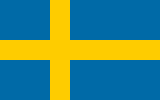
- description: blue with a golden yellow cross extending to the edges of the flag; the cross is shifted to the left side in the style of the Dannebrog (Danish flag)
meaning: the colors come from the Swedish coat of arms
Capital
- Name
- Stockholm
- Etymology
- the name of the city probably comes from the Swedish words stak (bay) or stock (stake or pole) and holm (island); it was built in the mid-13th century on the site of a fishing village, so the name may refer to building over earlier foundations
- Time difference
- UTC+1 (6 hours ahead of Washington, DC, during Standard Time)
- Daylight saving time
- +1hr, begins last Sunday in March; ends last Sunday in October
- Geographic coordinates
- 59 20 N, 18 03 E
- Suffrage
- 18 years of age; universal
Citizenship
- Citizenship BY birth
- no
- Citizenship BY descent only
- the father must be a citizen of Sweden; in the case of a child born out of wedlock, the mother must be a citizen of Sweden and the father unknown
- Dual citizenship recognized
- no, unless the other citizenship was acquired involuntarily
- Residency requirement for naturalization
- 5 years
Constitution
- History
- Sweden has four fundamental laws which together make up the Constitution: The Instrument of Government (several previous; latest 1974); The Act of Succession (enacted 1810; changed in 1937 and 1980); The Freedom of the Press Act (many previous; latest in 1949); The Fundamental Law on Freedom of Expression (adopted 1991)
- Amendment process
- proposed by Parliament; passage requires simple majority vote in two consecutive parliamentary terms with an intervening general election; passage also requires approval by simple majority vote in a referendum if Parliament approves a motion for a referendum by one third of its members; the results of such a referendum are only binding if a majority vote against the proposal
Country Name
- Etymology
- name derives from the North Germanic Svea tribe that inhabited central Sweden; the tribe's name probably comes from the Old German word sweba, meaning "independent;" the local form of the country's name, Sverige, means "kingdom of the Svea"
- Local long form
- Konungariket Sverige
- Local short form
- Sverige
- Conventional long form
- Kingdom of Sweden
- Conventional short form
- Sweden
- Independence
- 6 June 1523 (Gustav VASA elected king of Sweden, marking the abolishment of the Kalmar Union of Denmark, Norway, and Sweden)
- Legal system
- civil law system influenced by Roman-Germanic law and customary law
- Government type
- parliamentary constitutional monarchy
Judicial Branch
- Highest court(s)
- Supreme Court of Sweden (consists of 16 justices, including the court chairman); Supreme Administrative Court (consists of 18 justices, including the court president)
- Subordinate courts
- first instance, appellate, general, and administrative courts; specialized courts that handle cases such as land and environment, immigration, labor, markets, and patents
- Judge selection and term of office
- Supreme Court and Supreme Administrative Court justices nominated by the Judges Proposal Board, a 9-member nominating body consisting of high-level judges, prosecutors, and members of Parliament; justices appointed by the government; after a probationary period, justices' appointments are permanent
Executive Branch
- Cabinet
- Cabinet appointed by the prime minister
- Chief of state
- King CARL XVI GUSTAF (since 15 September 1973)
- Head of government
- Prime Minister Ulf KRISTERSSON (since 18 October 2022)
- Election/appointment process
- the monarchy is hereditary; following legislative elections, the leader of the majority party or majority coalition usually becomes the prime minister
- National holiday
- National Day, 6 June (1983)
- National color(s)
- blue, yellow
National Heritage
- Total world heritage sites
- 15 (13 cultural, 1 natural, 1 mixed)
- Selected world heritage site locales
- Royal Domain of Drottningholm (c); Laponian Area (m); High Coast/Kvarken Archipelago (n); Birka and Hovgården (c); Hanseatic Town of Visby (c); Church Town of Gammelstad, Luleå (c); Naval Port of Karlskrona (c); Rock Carvings in Tanum (c); Engelsberg Ironworks (c); Mining Area of the Great Copper Mountain in Falun (c)
- Political parties
- Center Party (Centerpartiet) or C
Christian Democrats (Kristdemokraterna) or KD
Green Party (Miljopartiet de Grona) or MP
Left Party (Vansterpartiet) or V
Moderate Party (Moderaterna) or M
Sweden Democrats (Sverigedemokraterna) or SD
Swedish Social Democratic Party (Socialdemokraterna) or S/SAP
The Liberals (Liberalerna) or L
Legislative Branch
- Term in office
- 4 years
- Number of seats
- 349 (all directly elected)
- Electoral system
- proportional representation
- Legislature name
- Parliament (Riksdagen)
- Scope of elections
- full renewal
- Legislative structure
- unicameral
- Most recent election date
- 9/11/2022
- Expected date of next election
- September 2026
- Percentage of women in chamber
- 45%
- Parties elected and seats per party
- Social Democratic Party (SAP) (107); Sweden Democrats (SD) (73); Moderate Party (M) (68); Left Party (VP) (24); Centre Party (CP) (24); Christian Democrats (KD) (19); Green Party (Mpg) (18); Other (16)
National Anthem(s)
- Title
- "Kungssangen" (Royal Song)
- History
- adopted 1844 as the royal anthem, but also used as the national anthem until 1893; only the first verse is sung if the monarch is present
- Lyrics/music
- Carl Wilhelm August Strandberg/Otto Lindblad
- National symbol(s)
- three crowns, lion
- Administrative divisions
- 21 counties (lan, singular and plural); Blekinge, Dalarna, Gavleborg, Gotland, Halland, Jamtland, Jonkoping, Kalmar, Kronoberg, Norrbotten, Orebro, Ostergotland, Skane, Sodermanland, Stockholm, Uppsala, Varmland, Vasterbotten, Vasternorrland, Vastmanland, Vastra Gotaland
Diplomatic Representation in the US
- Fax
- [1] (202) 467-2699
- Chancery
- 2900 K Street NW, Washington, DC 20007
- Telephone
- [1] (202) 467-2600
- Chief of mission
- Ambassador Urban AHLIN (since 15 September 2023)
- Consulate(s) general
- New York, San Francisco
- Email address and website
ambassaden.washington@gov.se
https://www.swedenabroad.se/en/embassies/usa-washington/
Diplomatic Representation from the US
- Fax
- [46] (08) 661-19-64
- Embassy
- Dag Hammarskjolds Vag 31, SE-115 89 Stockholm
- Telephone
- [46] (08) 783-53-00
- Mailing address
- 5750 Stockholm Place, Washington, DC 20521-5750
- Chief of mission
- Ambassador Christine TORETTI (since 21 October 2025)
- Email address and website
STKACSinfo@state.gov
https://se.usembassy.gov/
- International organisations
- ADB (nonregional member), AfDB (nonregional member), Arctic Council, Australia Group, BIS, CBSS, CD, CE, CERN, EAPC, EBRD, ECB, EIB, EITI (implementing country), EMU, ESA, EU, FAO, FATF, G-9, G-10, IADB, IAEA, IBRD, ICAO, ICC (national committees), ICCt, ICRM, IDA, IEA, IFAD, IFC, IFRCS, IGAD (partners), IHO, ILO, IMF, IMO, IMSO, Interpol, IOC, IOM, IPU, ISO, ITSO, ITU, ITUC (NGOs), MIGA, MONUSCO, NATO, NC, NEA, NIB, NSG, OAS (observer), OECD, OPCW, OSCE, Paris Club, PCA, PFP, Schengen Convention, UN, UNCTAD, UNESCO, UNHCR, UNIDO, UNMISS, UNMOGIP, UNOOSA, UNRWA, UN Security Council (temporary), UNSOM, UNTSO, UPU, Wassenaar Arrangement, WCO, WFTU (NGOs), WHO, WIPO, WMO, WTO, ZC
- International law organization participation
- accepts compulsory ICJ jurisdiction with reservations; accepts ICCt jurisdiction
Legislature
SWEDEN · LEGISLATURE
Riksdag
349 seats · hover a seat for the party
Total seats
349
Majority line
176
Largest party
Swedish Social Democratic Party
Parties
14
All political parties
Next election
2026
Leaders
Current
Carl XVI Gustaf of Sweden
- Head of State
Ulf Kristersson
- Head of Government
Economy
Budget
- Note
- note: central government revenues (excluding grants) and expenditures converted to US dollars at average official exchange rate for year indicated
- Revenues
- $195.468 billion (2022 est.)
- Expenditures
- $191.095 billion (2022 est.)
Exports
- Civica canonical (reconciled)
- $327.9B
- Note
- note: balance of payments - exports of goods and services in current dollars
- Exports 2022
- $318.203 billion (2022 est.)
- Exports 2023
- $329.332 billion (2023 est.)
- Exports 2024
- $338.852 billion (2024 est.)
Imports
- Civica canonical (reconciled)
- $311.4B
- Note
- note: balance of payments - imports of goods and services in current dollars
- Imports 2022
- $304.101 billion (2022 est.)
- Imports 2023
- $304.194 billion (2023 est.)
- Imports 2024
- $309.526 billion (2024 est.)
- Industries
- iron and steel, precision equipment (bearings, radio and telephone parts, armaments), wood pulp and paper products, processed foods, motor vehicles
- Labor force
- 5.699 million (2024 est.)
Public Debt
- Civica canonical (reconciled)
- 35.1%
- Note
- note: central government debt as a % of GDP
- Public debt 2022
- 36.9% of GDP (2022 est.)
Remittances
- Note
- note: personal transfers and compensation between resident and non-resident individuals/households/entities
- Remittances 2022
- 0.6% of GDP (2022 est.)
- Remittances 2023
- 0.7% of GDP (2023 est.)
- Remittances 2024
- 0.8% of GDP (2024 est.)
Exchange Rates
- Currency
- Swedish kronor (SEK) per US dollar -
- Exchange rates 2020
- 9.21 (2020 est.)
- Exchange rates 2021
- 8.577 (2021 est.)
- Exchange rates 2022
- 10.114 (2022 est.)
- Exchange rates 2023
- 10.61 (2023 est.)
- Exchange rates 2024
- 10.568 (2024 est.)
- Economic overview
- high-income, largest Nordic economy; EU member but does not use the euro; export-oriented, led by automotive, electronics, machinery, and pharmaceuticals; highly ranked for competitiveness, R&D investments and governance; recovery, with falling inflation and real wage growth balanced by risks from trade uncertainty
Unemployment Rate
- Civica canonical (reconciled)
- 8.7%
- Note
- note: % of labor force seeking employment
- Unemployment rate 2022
- 7.4% (2022 est.)
- Unemployment rate 2023
- 7.7% (2023 est.)
- Unemployment rate 2024
- 8.6% (2024 est.)
- Exports partners
- Germany 10%, USA 10%, Denmark 8%, Norway 6%, Netherlands 5% (2023)
- Imports partners
- Germany 17%, Netherlands 10%, Norway 9%, Denmark 6%, China 6% (2023)
Real GDP Per Capita
- Civica canonical (reconciled)
- $71,845
- Note
- note: data in 2021 dollars
- Real GDP per capita 2022
- $63,200 (2022 est.)
- Real GDP per capita 2023
- $62,800 (2023 est.)
- Real GDP per capita 2024
- $63,300 (2024 est.)
Real GDP Growth Rate
- Civica canonical (reconciled)
- 1.5%
- Note
- note: annual GDP % growth based on constant local currency
- Real GDP growth rate 2022
- 1.5% (2022 est.)
- Real GDP growth rate 2023
- -0.1% (2023 est.)
- Real GDP growth rate 2024
- 1% (2024 est.)
- Agricultural products
- milk, wheat, sugar beets, barley, potatoes, oats, rapeseed, pork, chicken, beef (2023)
- Exports commodities
- cars, refined petroleum, packaged medicine, paper, vehicle parts/accessories (2023)
- Imports commodities
- cars, crude petroleum, refined petroleum, vehicle parts/accessories, garments (2023)
Current Account Balance
- Civica canonical (reconciled)
- $39.1B
- Note
- note: balance of payments - net trade and primary/secondary income in current dollars
- Current account balance 2022
- $27.404 billion (2022 est.)
- Current account balance 2023
- $40.819 billion (2023 est.)
- Current account balance 2024
- $45.274 billion (2024 est.)
- Taxes and other revenues
- 27.6% (of GDP) (2022 est.)
- GDP (official exchange rate)
- $610.118 billion (2024 est.)
GDP Composition, BY End Use
- Note
- note: figures may not total 100% due to rounding or gaps in data collection
- Household consumption
- 43.7% (2023 est.)
- Government consumption
- 26% (2023 est.)
- Investment in inventories
- -0.1% (2023 est.)
- Investment in fixed capital
- 25% (2023 est.)
- Exports of goods and services
- 55.4% (2023 est.)
- Imports of goods and services
- -51.4% (2023 est.)
- Population below poverty line
- 16.1% (2022 est.)
Average Household Expenditures
- On food
- 13% of household expenditures (2023 est.)
- On alcohol and tobacco
- 3.1% of household expenditures (2023 est.)
Inflation Rate (Consumer Prices)
- Civica canonical (reconciled)
- 2.6%
- Note
- note: annual % change based on consumer prices
- Inflation rate (consumer prices) 2022
- 8.4% (2022 est.)
- Inflation rate (consumer prices) 2023
- 8.5% (2023 est.)
- Inflation rate (consumer prices) 2024
- 2.8% (2024 est.)
- Industrial production growth rate
- 0.3% (2024 est.)
Real GDP (Purchasing Power Parity)
- Civica canonical (reconciled)
- $668.628 billion (2024 est.)
- Note
- note: data in 2021 dollars
- Real GDP (purchasing power parity) 2022
- $662.937 billion (2022 est.)
- Real GDP (purchasing power parity) 2023
- $662.18 billion (2023 est.)
- Real GDP (purchasing power parity) 2024
- $668.628 billion (2024 est.)
Youth Unemployment Rate (Ages 15 24)
- Male
- 24.3% (2024 est.)
- Note
- note: % of labor force ages 15-24 seeking employment
- Total
- 23.8% (2024 est.)
- Female
- 23.2% (2024 est.)
Reserves of Foreign Exchange and Gold
- Note
- note: holdings of gold (year-end prices)/foreign exchange/special drawing rights in current dollars
- Reserves of foreign exchange and gold 2022
- $64.289 billion (2022 est.)
- Reserves of foreign exchange and gold 2023
- $60.863 billion (2023 est.)
- Reserves of foreign exchange and gold 2024
- $62.569 billion (2024 est.)
GDP Composition, BY Sector of Origin
- Note
- note: figures may not total 100% due to non-allocated consumption not captured in sector-reported data
- Industry
- 22.6% (2024 est.)
- Services
- 65.9% (2024 est.)
- Agriculture
- 1.1% (2024 est.)
Household Income or Consumption BY Percentage Share
- Note
- note: % share of income accruing to lowest and highest 10% of population
- Lowest 10%
- 2.5% (2022 est.)
- Highest 10%
- 24.7% (2022 est.)
Gini Index Coefficient Distribution of Family Income
- Note
- note: index (0-100) of income distribution; higher values represent greater inequality
- Gini index coefficient distribution of family income 2022
- 31.6 (2022 est.)
Energy
Coal
- Exports
- 23,000 metric tons (2023 est.)
- Imports
- 2.078 million metric tons (2023 est.)
- Production
- 1.042 million metric tons (2023 est.)
- Consumption
- 3.17 million metric tons (2023 est.)
- Proven reserves
- 5 million metric tons (2023 est.)
Petroleum
- Total petroleum production
- 11,000 bbl/day (2023 est.)
- Refined petroleum consumption
- 270,000 bbl/day (2024 est.)
Electricity
- Exports
- 36.151 billion kWh (2023 est.)
- Imports
- 7.335 billion kWh (2023 est.)
- Consumption
- 125.273 billion kWh (2023 est.)
- Installed generating capacity
- 55.307 million kW (2023 est.)
- Transmission/distribution losses
- 9.109 billion kWh (2023 est.)
Natural Gas
- Exports
- 10.625 million cubic meters (2023 est.)
- Imports
- 897.487 million cubic meters (2023 est.)
- Consumption
- 896.109 million cubic meters (2023 est.)
Nuclear Energy
- Number of operational nuclear reactors
- 6 (2025)
- Percent of total electricity production
- 28.6% (2023 est.)
- Net capacity of operational nuclear reactors
- 7.01GW (2025 est.)
- Number of nuclear reactors permanently shut down
- 7 (2025)
Electricity Access
- Electrification total population
- 100% (2022 est.)
Energy Consumption Per Capita
- Total energy consumption per capita 2023
- 142.102 million Btu/person (2023 est.)
Electricity Generation Sources
- Wind
- 21% of total installed capacity (2023 est.)
- Solar
- 1.9% of total installed capacity (2023 est.)
- Nuclear
- 28.6% of total installed capacity (2023 est.)
- Fossil fuels
- 0.5% of total installed capacity (2023 est.)
- Hydroelectricity
- 40.2% of total installed capacity (2023 est.)
- Biomass and waste
- 7.8% of total installed capacity (2023 est.)
Communications
Internet Users
- Percent of population
- 96% (2023 est.)
- Broadcast media
- publicly owned TV broadcaster has 2 terrestrial networks plus regional stations; multiple privately owned TV broadcasters operating nationally, regionally, and locally; about 50 local TV stations; widespread access to pan-Nordic and international broadcasters through multi-channel cable and satellite TV; publicly owned radio broadcaster has 3 national stations and a network of 25 regional channels; roughly 100 privately owned local radio stations, with some consolidating into near-national networks; an estimated 900 community and neighborhood radio stations broadcast intermittently
- Internet country code
- .se
Telephones Fixed Lines
- Total subscriptions
- 898,000 (2023 est.)
- Subscriptions per 100 inhabitants
- 9 (2023 est.)
Telephones Mobile Cellular
- Total subscriptions
- 14.9 million (2024 est.)
- Subscriptions per 100 inhabitants
- 141 (2024 est.)
Broadband Fixed Subscriptions
- Total
- 4.3 million (2023 est.)
- Subscriptions per 100 inhabitants
- 41 (2023 est.)
Transport
Ports
- Large
- 3
- Small
- 30
- Medium
- 10
- Key ports
- Falkenberg, Goteborg, Helsingborg, Karlsborg, Karlshamn, Lulea, Malmo, Norrkoping, Stockholm, Sundsvall, Uddevalla, Varberg, Vasteras
- Very small
- 49
- Total ports
- 92 (2024)
- Ports with oil terminals
- 49
- Airports
- 206 (2025)
Railways
- Total
- 10,910 km (2020) 8,184 km electrified
- Narrow gauge
- 65 km
- Heliports
- 11 (2025)
Merchant Marine
- Total
- 361 (2023)
- BY type
- general cargo 44, oil tanker 18, other 299
- Civil aircraft registration country code prefix
- SE
Environment
- Climate
- temperate in south with cold, cloudy winters and cool, partly cloudy summers; subarctic in north
Geoparks
- Global geoparks and regional networks
- Platåbergens (2023)
- Total global geoparks and regional networks
- 1
Land Use
- Other
- 23.8% (2023 est.)
- Forest
- 68.6% (2023 est.)
- Agricultural land
- 7.3% (2023 est.)
- Agricultural land: arable land
- arable land: 6.2% (2023 est.)
- Agricultural land: permanent crops
- permanent crops: 0% (2023 est.)
- Agricultural land: permanent pasture
- permanent pasture: 1.1% (2023 est.)
Urbanization
- Urban population
- 88.7% of total population (2023)
- Rate of urbanization
- 0.89% annual rate of change (2020-25 est.)
Methane Emissions
- Other
- 9.8 kt (2019-2021 est.)
- Waste
- 112.7 kt (2019-2021 est.)
- Energy
- 39.6 kt (2022-2024 est.)
- Agriculture
- 127.8 kt (2019-2021 est.)
Waste and Recycling
- Municipal solid waste generated annually
- 4.618 million tons (2024 est.)
- Percent of municipal solid waste recycled
- 39.7% (2022 est.)
- Environmental issues
- marine pollution (Baltic Sea and North Sea); acid rain damage to soil and lakes; air pollution; poor timber-harvesting practices
Total Water Withdrawal
- Municipal
- 699 million cubic meters (2022 est.)
- Industrial
- 1.267 billion cubic meters (2022 est.)
- Agricultural
- 102 million cubic meters (2022 est.)
Carbon Dioxide Emissions
- Total emissions
- 43.96 million metric tonnes of CO2 (2023 est.)
- From consumed natural gas
- 1.868 million metric tonnes of CO2 (2023 est.)
- From coal and metallurgical coke
- 5.324 million metric tonnes of CO2 (2023 est.)
- From petroleum and other liquids
- 36.768 million metric tonnes of CO2 (2023 est.)
- Particulate matter emissions
- 6 micrograms per cubic meter (2019 est.)
- Total renewable water resources
- 174 billion cubic meters (2022 est.)
International Environmental Agreements
- Party to
- Air Pollution, Air Pollution-Heavy Metals, Air Pollution-Multi-effect Protocol, Air Pollution-Nitrogen Oxides, Air Pollution-Persistent Organic Pollutants, Air Pollution-Sulphur 85, Air Pollution-Sulphur 94, Air Pollution-Volatile Organic Compounds, Antarctic-Environmental Protection, Antarctic-Marine Living Resources, Antarctic Treaty, Biodiversity, Climate Change, Climate Change-Kyoto Protocol, Climate Change-Paris Agreement, Comprehensive Nuclear Test Ban, Desertification, Endangered Species, Environmental Modification, Hazardous Wastes, Law of the Sea, Marine Dumping-London Convention, Marine Dumping-London Protocol, Nuclear Test Ban, Ozone Layer Protection, Ship Pollution, Tropical Timber 2006, Wetlands, Whaling
- Signed, but not ratified
- none of the selected agreements
Military & Security
- Military note
- the Swedish military is responsible for deterrence and the defense of the country and its territories against armed attack, supporting Sweden’s national security interests, providing societal support, such as humanitarian aid, and contributing to international peacekeeping and peacemaking operations; the military has a relatively small active duty force that is designed to be rapidly mobilized in a crisis with a trained reserve and a Home Guard
Sweden maintained a policy of military non-alignment for over 200 years before applying for NATO membership in May 2022 following Russia’s full-scale invasion of Ukraine; it became a NATO member in March 2024; prior to membership, Stockholm joined NATO’s Partnership for Peace program in 1994 and contributed to NATO-led missions, including those in Afghanistan, Iraq, and Kosovo; the military cooperates closely with the forces of other Nordic countries through the Nordic Defense Cooperation (NORDEFCO; established 2009), which consists of Denmark, Finland, Iceland, Norway, and Sweden; Sweden is a signatory of the EU’s Common Security and Defense Policy (CSDP) and contributes to CSDP missions and operations, including EU battlegroups; it also participates in UN-led missions; Sweden has close bilateral security relations with some individual NATO member states, particularly Finland, Germany, Norway, the UK, and the US (2025) - Military deployments
- approximately 600 Latvia (NATO) (2025)
Military Expenditures
- Civica canonical (reconciled)
- 2.5% of GDP (2025 est.)
- Military expenditures 2021
- 1.4% of GDP (2021 est.)
- Military expenditures 2022
- 1.5% of GDP (2022 est.)
- Military expenditures 2023
- 1.7% of GDP (2023 est.)
- Military expenditures 2024
- 2.3% of GDP (2024 est.)
- Military expenditures 2025
- 2.5% of GDP (2025 est.)
- Military and security forces
- Swedish Armed Forces (Försvarsmakten): Army, Navy, Air Force, Home Guard (202)
- Military service age and obligation
- 18 years of age for voluntary and selective conscripted service for men and women; conscript service obligation typically 9-15 months depending on the branch of service and position, with a reserve commitment up to age 45 (2026)
- Military equipment inventories and acquisitions
- the SAF's inventory is comprised of mostly domestically produced armaments alongside smaller amounts of imported Western systems; Sweden's defense industry produces a range of air, land, and naval systems, including armored vehicles, combat aircraft, and submarines; it also produces weapons systems jointly with other countries (2025)
- Military and security service personnel strengths
- approximately 25,000 active military personnel; approximately 21,000 Home Guard (2025)
Terrorism
- Terrorist group(s)
- Islamic State of Iraq and ash-Sham (ISIS)
Space
- Space launch site(s)
- Esrange Space Center (Kiruna) (2025)
- Space agency/agencies
- Swedish National Space Agency (SNSA; established 1972; known until 2018 as the Swedish National Space Board) (2025)
- Space program overview
- aims to have one of Europe's leading space programs; produces and operates satellites; builds and launches sounding rockets; involved in the research, development, production, and operations of a variety of other space-related areas, including astronomy, atmospheric monitoring, geographic information systems, infrared imaging, meteorology, propulsion systems, remote sensing, satellite subsystems, spacecraft systems and structures, research, and telecommunications; member of the ESA and program is integrated into its framework; works extensively with foreign space agencies, in particular through the ESA and EU and their member states, as well as with the US; participates in programs such as Europe's Copernicus Earth observation and the Galileo global navigation satellite system, France's Pleiades project, and the Square Kilometer Array Project; has a large commercial space industry, including state-owned enterprises (2025)
- Key space program milestones
- 1950s - space program initiated with the establishment of a space observatory and the Swedish Space Research Committee
1961 - launched first sounding rocket
1986 - first scientific satellite (Viking) launched on European rocket
1989 - first communications satellite (Tele-X) launched on European rocket
2006 - first astronaut into space on US Space Shuttle
2019 - established a space data lab for artificial intelligence-based analysis of imagery data
2024 - signed US-led Artemis Accords for space and lunar exploration; launched first military communications satellite (GNA-3); adopted its first defense and security space strategy
Transnational Issues
Refugees and Internally Displaced Persons
- Refugees
- 168,519 (2024 est.)
- Stateless persons
- 6,835 (2024 est.)
Scores & Rankings
ScoreValueGlobal rankTrendAs of
Civica Index87.0 / 100as of 2024-Q45 / 190−2.02024-Q4
V-Dem Liberal Democracy0.84as of 2024-Q44 / 170−0.032024-Q4
Freedom House StatusFree (100/100)as of 2024-Q4—−1.02024-Q4
Press Freedom (RSF)Free press (88/100)as of 2024—2024
Human Development Index0.952as of 2022—2022
Corruption Perceptions Index82 / 100as of 20236 / 1802023
Cite this page
Cite this page
Civica. (2026). Civica Atlas — Sweden — vintage 2026-Q1: Sweden factbook. Civica Atlas. Retrieved May 7, 2026, from https://civicaatlas.org/factbook/sweden
Sources: Eurostat, FAO FAOSTAT, ILO ILOSTAT, IMF (WEO), OECD.Stat, UN Statistics Division, UNDP HDR, UNESCO Institute for Statistics, V-Dem, WHO Global Health Observatory, World Bank, WTO Stats, CIA World Factbook, Wikidata