Saint Martin
Pop33KCP0.0→Beta
 Saint Martin
⌘K
Overview
- Background
- Christopher COLUMBUS claimed Saint Martin for Spain in 1493, naming it after the feast day of St. Martin of Tours, but it was the Dutch who occupied the island in 1631 to exploit its salt deposits. The Spanish retook Saint Martin in 1633, but the Dutch continued to assert their claims. The Spanish finally relinquished the island to the French and Dutch, who divided it between themselves in 1648. The border frequently fluctuated over the next 200 years because of friction between the two countries, with the French eventually holding the greater portion of the island (about 61%).
The cultivation of sugarcane introduced African slavery to the island in the late 18th century; the practice was not abolished until 1848. The island became a free port in 1939, and the tourism industry was dramatically expanded during the 1970s and 1980s. In 2003, the populace of Saint Martin voted to secede from Guadeloupe, and in 2007, the northern portion of the island became a French overseas collectivity. In 2010, the southern Dutch portion of the island became the independent nation of Sint Maarten within the Kingdom of the Netherlands. In 2017, Hurricane Irma passed over the island of Saint Martin, causing extensive damage to roads, communications, electrical power, and housing; the UN estimated that 90% of the buildings were damaged or destroyed.
Geography
Area
- Land
- 50 sq km
- Water
- negligible
- Total
- 50 sq km
- Climate
- temperature averages 27-29 degrees Celsius all year long; low humidity, gentle trade winds, brief, intense rain showers; hurricane season stretches from July to November
Land Use
- Other
- 75.2% (2022 est.)
- Forest
- 24.8% (2022 est.)
- Agricultural land
- 0% (2022 est.)
- Location
- Caribbean, located in the Leeward Islands (northern) group; French part of the island of Saint Martin in the Caribbean Sea; Saint Martin lies east of the US Virgin Islands
- Coastline
- 58.9 km (for entire island)
Elevation
- Lowest point
- Caribbean Sea 0 m
- Highest point
- Pic du Paradis 424 m
- Map references
- Central America and the Caribbean
Land Boundaries
- Total
- 16 km
- Border countries
- Sint Maarten 16 km
- Natural hazards
- subject to hurricanes from July to November
- Geography note
- note 1: the southern border is shared with Sint Maarten, which is part of the Kingdom of the Netherlands; together, these two entities make up the smallest landmass in the world that is shared by two self-governing states
note 2: Simpson Bay Lagoon (aka Simson Bay Lagoon or The Great Pond) is one of the largest inland lagoons in the West Indies; the border between the French and Dutch halves of the island runs across the center of the lagoon, which is shared by both of the island's entities - Natural resources
- salt
- Area comparative
- more than one-third the size of Washington, D.C.
- Geographic coordinates
- 18 05 N, 63 57 W
- Population distribution
- most of the population is found along the coast, with the largest concentration around the capital of Marigot, as well as Orleans and Grand-Case
People & Society
Languages
- Languages
- French (official), Dutch, English, Guadeloupian Creole, Haitian Creole, Italian, Martiniquan Creole, Papiamento (dialect of Netherlands Antilles), Spanish
- Major language sample(s)
The World Factbook, une source indispensable d'informations de base. (French)
The World Factbook, the indispensable source for basic information.
- Religions
- Roman Catholic, Jehovah's Witness, Protestant, Hindu
Sex Ratio
- At birth
- 1.04 male(s)/female
- 0 14 years
- 0.99 male(s)/female
- 15 64 years
- 0.92 male(s)/female
- Total population
- 0.92 male(s)/female (2024 est.)
- 65 years and over
- 0.75 male(s)/female
- Birth rate
- 13.78 births/1,000 population (2025 est.)
- Death rate
- 4.83 deaths/1,000 population (2025 est.)
Median Age
- Male
- 33.4 years
- Total
- 34.3 years (2025 est.)
- Female
- 34.9 years
Population
- Male
- 15,825
- Total
- 33,093 (2025 est.)
- Female
- 17,268
Age Structure
- 0 14 years
- 24.7% (male 4,039/female 4,100)
- 15 64 years
- 64.5% (male 10,216/female 11,068)
- 65 years and over
- 10.8% (2024 est.) (male 1,536/female 2,037)
- Ethnic groups
- Creole (Mulatto), Black, Guadeloupe Mestizo (French-East Asian), White, East Indian, other
Dependency Ratios
- Total dependency ratio
- 55.4 (2025 est.) N
- Youth dependency ratio
- 38 (2025 est.)
- Potential support ratio
- 5.7 (2025 est.)
- Elderly dependency ratio
- 17.4 (2025 est.)
- Net migration rate
- -6.07 migrant(s)/1,000 population (2025 est.)
- Total fertility rate
- 1.8 children born/woman (2025 est.)
Drinking Water Source
- Improved: total
- total: 100% of population
- Unimproved: urban
- urban: 0% of population
Education Expenditure
- Education expenditure (% GDP)
- 3.9% of GDP (2023 est.) NA
- Education expenditure (% national budget)
- 23% national budget (2023 est.)
Infant Mortality Rate
- Male
- 7.6 deaths/1,000 live births
- Total
- 6.3 deaths/1,000 live births (2025 est.)
- Female
- 5.3 deaths/1,000 live births
- Population growth rate
- 0.29% (2025 est.)
- Gross reproduction rate
- 0.88 (2025 est.)
- Population distribution
- most of the population is found along the coast, with the largest concentration around the capital of Marigot, as well as Orleans and Grand-Case
Life Expectancy at Birth
- Male
- 78 years
- Female
- 84.2 years
- Total population
- 81 years (2024 est.)
Sanitation Facility Access
- Improved: total
- total: 100% of population (2022 est.)
- Improved: urban
- urban: 100% of population (2022 est.)
- Unimproved: total
- total: 0% of population (2022 est.)
- Unimproved: urban
- urban: 0% of population (2022 est.)
Government
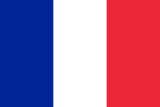
- Flag
- the flag of France is used
Capital
- Name
- Marigot
- Etymology
- the name is taken from the French word marigot, meaning "backwater" or "swampy area;" it probably comes from the original fishing village's location next to a water-logged area on a lagoon
- Time difference
- UTC-4 (1 hour ahead of Washington, DC, during Standard Time)
- Geographic coordinates
- 18 04 N, 63 05 W
- Suffrage
- 18 years of age, universal
- Citizenship
- see France
Constitution
- History
- 4 October 1958 (French Constitution)
- Amendment process
- amendment procedures of France's constitution apply
Country Name
- Etymology
- explorer Christopher COLUMBUS named the island after Saint MARTIN of Tours during a visit on 11 November 1493, the saint's feast day
- Local long form
- Collectivité d'outre mer de Saint-Martin
- Local short form
- Saint-Martin
- Conventional long form
- Overseas Collectivity of Saint Martin
- Conventional short form
- Saint Martin
- Independence
- none (overseas collectivity of France)
- Legal system
- French civil law
- Government type
- parliamentary democracy (Territorial Council); overseas collectivity of France
Executive Branch
- Cabinet
- Executive Council, as well as an advisory economic, social, and cultural council
- Chief of state
- President Emmanuel MACRON (since 14 May 2017); represented by Prefect Cyrille LE VELY (since 10 February 2025)
- Election results
2022: Louis MUSSINGTON (RSM) elected president; Territorial Council vote - unanimous
2017: Daniel Gibbs (UD) elected president; Territorial Council vote - 18 of 23 votes- Head of government
- President of Territorial Council Louis MUSSINGTON (since 3 April 2022)
- Most recent election date
- 3 April 2022
- Election/appointment process
- French president directly elected by absolute-majority popular vote in 2 rounds, if needed, for a 5-year term (eligible for a second term); prefect appointed by French president on the advice of French Ministry of Interior; president of Territorial Council elected by its members for a 5-year term
- Expected date of next election
- 2027
- National holiday
- Fête de la Fédération, 14 July (1790)
- Dependency status
- overseas collectivity of France
- Political parties
- Alternative
Future Saint Martin (Avenir Saint Martin)
Generation Hope or HOPE
Rassemblement Saint-Martinois or RSM (formerly Movement for Justice and Prosperity or MJP)
Saint Martin with You
Union for Democracy or UD
Legislative Branch
- Note
- note: 1 senator is indirectly elected to the French Senate by an electoral college for a 6-year term, and 1 deputy (shared with Saint Barthelemy) is directly elected to the French National Assembly for a 5-year term
- Term in office
- 5 years
- Number of seats
- 23 (directly elected)
- Electoral system
- plurality/majority
- Legislature name
- Territorial Council
- Scope of elections
- full renewal
- Legislative structure
- unicameral
- Most recent election date
- 3/27/2022
- Expected date of next election
- March 2027
- Percentage of women in chamber
- 43.5%
- Parties elected and seats per party
- RSM and Alternative (16); UD (5); HOPE, Saint Martin with You, and Future Saint Martin (2)
National Anthem(s)
- Title
- "La Marseillaise" (The Song of Marseille)
- History
- official anthem, as a French collectivity
- Lyrics/music
- Claude-Joseph ROUGET de Lisle
- National symbol(s)
- brown pelican
- Diplomatic representation in the US
- none (overseas collectivity of France)
Diplomatic Representation from the US
- Embassy
- none (overseas collectivity of France)
- International organisations
- ACS (associate), UPU
Economy
- Industries
- tourism, light industry and manufacturing, heavy industry
Exchange Rates
- Currency
- euros (EUR) per US dollar -
- Exchange rates 2020
- 0.876 (2020 est.)
- Exchange rates 2021
- 0.845 (2021 est.)
- Exchange rates 2022
- 0.95 (2022 est.)
- Exchange rates 2023
- 0.925 (2023 est.)
- Exchange rates 2024
- 0.924 (2024 est.)
- Economic overview
- high-income French Caribbean territorial economy; extremely reliant on tourism, with severe COVID-19 impacts; near-total destruction from Hurricane Irma in 2017; some offshore banking; import-dependent; duty-free commerce; yachting destination
- Exports partners
- United States 35%, Netherlands 26%, Antigua and Barbuda 21%, France 10% (2019)
- Imports partners
- United States 76%, Netherlands 7%, France 7% (2019)
Real GDP Growth Rate
- Note
- note: annual GDP % growth based on constant local currency
- Real GDP growth rate 2019
- 6.5% (2019 est.)
- Real GDP growth rate 2020
- -12.5% (2020 est.)
- Real GDP growth rate 2021
- 4.9% (2021 est.)
- Exports commodities
- gold, special use vessels, furniture, scrap aluminum, rum (2019)
- Imports commodities
- jewelry, diamonds, pearls, recreational boats, cars (2019)
- GDP (official exchange rate)
- $649.206 million (2021 est.)
Energy
Electricity Access
- Electrification total population
- 100% (2022 est.)
Communications
Internet Users
- Percent of population
- 48.5% (2022 est.)
- Broadcast media
- 1 local TV station; access to about 20 radio stations, including RFO Guadeloupe radio broadcasts via repeater
- Internet country code
- .mf
Telephones Mobile Cellular
- Total subscriptions
- 68,840 (2012 est.)
- Subscriptions per 100 inhabitants
- 196 (2012 est.)
Transport
- Airports
- 1 (2025)
Environment
- Climate
- temperature averages 27-29 degrees Celsius all year long; low humidity, gentle trade winds, brief, intense rain showers; hurricane season stretches from July to November
Land Use
- Other
- 75.2% (2022 est.)
- Forest
- 24.8% (2022 est.)
- Agricultural land
- 0% (2022 est.)
Waste and Recycling
- Municipal solid waste generated annually
- 15,500 tons (2024 est.)
- Environmental issues
- waste management; salinity intrusions; limited freshwater resources; over-exploitation of marine resources (reef fisheries, coral, and shell); water pollution and damage to coral reefs from boats
Military & Security
- Military note
- defense is the responsibility of France
- Military and security forces
- no regular military forces; Ministry of Justice: Police Force of Sint Maaten (Korps Politie Sint Marteen, KPSM) (2025)
Transnational Issues
Refugees and Internally Displaced Persons
- Refugees
- 156 (2024 est.)
Cite this page
Cite this page
Civica. (2026). Civica Atlas — Saint Martin — vintage 2026-Q1: Saint Martin factbook. Civica Atlas. Retrieved May 7, 2026, from https://civicaatlas.org/factbook/saint-martin
Sources: CIA World Factbook