Saint Barthelemy
Pop7KCP0.0→Beta
 Saint Barthelemy
⌘K
Overview
- Background
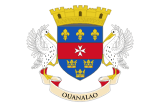
- In 1493, Christopher COLUMBUS named Saint Barthelemy for his brother Bartolomeo, but the island was first settled by the French in 1648. In 1784, France sold the island to Sweden, which renamed the largest town Gustavia after the Swedish King GUSTAV III and made it a free port; the island prospered as a trade and supply center during the colonial wars of the 18th century. France repurchased the island in 1877 and took control the following year, placing it under the administration of Guadeloupe. Saint Barthelemy retained its free port status along with various Swedish appellations such as Swedish street and town names, and the three-crown symbol on the coat of arms. In 2003, the islanders voted to secede from Guadeloupe, and in 2007, the island became a French overseas collectivity. In 2012, it became an overseas territory of the EU, allowing it to exert local control over the permanent and temporary immigration of foreign workers, including non-French European citizens. Hurricane Irma hit the island in 2017 and caused extensive damage.
Geography
Area
- Land
- 25 sq km
- Water
- negligible
- Total
- 25 sq km
- Climate
- tropical, with practically no variation in temperature; has two seasons (dry and humid)
- Terrain
- hilly, almost completely surrounded by shallow-water reefs, with plentiful beaches
Land Use
- Other
- 91.5% (2022 est.)
- Forest
- 8.5% (2022 est.)
- Agricultural land
- 0% (2022 est.)
- Location
- Caribbean, island between the Caribbean Sea and the North Atlantic Ocean; located in the Leeward Islands (northern) group; Saint Barthelemy lies east of the US Virgin Islands
Elevation
- Lowest point
- Caribbean Sea 0 m
- Highest point
- Morne du Vitet 286 m
- Map references
- Central America and the Caribbean
Land Boundaries
- Total
- 0 km
- Geography note
- a 1,200-hectare (3,000-acre) marine nature reserve, the Reserve Naturelle, is made up of five zones around the island that form a network to protect the island's coral reefs, seagrass, and endangered marine species
- Natural resources
- few natural resources; beaches foster tourism
- Area comparative
- less than one-eighth the size of Washington, D.C.
- Geographic coordinates
- 17 90 N, 62 85 W
- Population distribution
- most of the populace is concentrated in and around the capital of Gustavia, but scattered settlements exist around the island's periphery
People & Society
Languages
- Languages
- French (primary), English
- Major language sample(s)
The World Factbook, une source indispensable d'informations de base. (French)
The World Factbook, the indispensable source for basic information.
Sex Ratio
- At birth
- 1.06 male(s)/female
- 0 14 years
- 1.06 male(s)/female
- 15 64 years
- 1.17 male(s)/female
- Total population
- 1.12 male(s)/female (2024 est.)
- 65 years and over
- 1.01 male(s)/female
- Birth rate
- 9.32 births/1,000 population (2025 est.)
- Death rate
- 9.75 deaths/1,000 population (2025 est.)
Median Age
- Male
- 47 years
- Total
- 47.7 years (2025 est.)
- Female
- 47.8 years
Population
- Male
- 3,730
- Total
- 7,079 (2025 est.)
- Female
- 3,349
Age Structure
- 0 14 years
- 13.9% (male 506/female 479)
- 15 64 years
- 63.1% (male 2,413/female 2,057)
- 65 years and over
- 23% (2024 est.) (male 818/female 813)
- Ethnic groups
- French, Portuguese, Caribbean, Afro-Caribbean
Dependency Ratios
- Total dependency ratio
- 60.1 (2025 est.)
- Youth dependency ratio
- 22 (2025 est.)
- Potential support ratio
- 2.6 (2025 est.)
- Elderly dependency ratio
- 38 (2025 est.)
- Net migration rate
- -0.42 migrant(s)/1,000 population (2025 est.)
- Total fertility rate
- 1.64 children born/woman (2025 est.)
Drinking Water Source
- Improved: total
- total: 100% of population (2022 est.)
- Improved: urban
- urban: 100% of population (2022 est.)
- Unimproved: total
- total: 0% of population (2022 est.)
- Unimproved: urban
- urban: 0% of population (2022 est.)
Infant Mortality Rate
- Male
- 7.6 deaths/1,000 live births
- Total
- 6.3 deaths/1,000 live births (2025 est.)
- Female
- 5.3 deaths/1,000 live births
- Population growth rate
- -0.08% (2025 est.)
- Gross reproduction rate
- 0.79 (2025 est.)
- Population distribution
- most of the populace is concentrated in and around the capital of Gustavia, but scattered settlements exist around the island's periphery
Life Expectancy at Birth
- Male
- 78 years
- Female
- 84.2 years
- Total population
- 81 years (2024 est.)
Sanitation Facility Access
- Improved: total
- total: 100% of population (2022 est.)
- Improved: urban
- urban: 100% of population (2022 est.)
- Unimproved: total
- total: 0% of population (2022 est.)
- Unimproved: urban
- urban: 0% of population (2022 est.)
Government
- Flag
- the flag of France is used
Capital
- Name
- Gustavia
- Etymology
- named in honor of King GUSTAV III of Sweden, who was ruler when Sweden bought the island from France in 1784; the name was retained when the island was sold back to France in 1878
- Time difference
- UTC-4 (1 hour ahead of Washington, DC, during Standard Time)
- Geographic coordinates
- 17 53 N, 62 51 W
- Suffrage
- 18 years of age, universal
- Citizenship
- see France
Constitution
- History
- 4 October 1958 (French Constitution)
- Amendment process
- amendment procedures of France's constitution apply
Country Name
- Etymology
- explorer Christopher COLUMBUS named the island in honor of his brother Bartolomeo in 1493
- Abbreviation
- Saint-Barth (French)/ St. Barts or St. Barths (English)
- Local long form
- Collectivité d'outre mer de Saint-Barthélemy
- Local short form
- Saint-Barthélemy
- Conventional long form
- Overseas Collectivity of Saint Barthelemy
- Conventional short form
- Saint Barthelemy
- Independence
- none (overseas collectivity of France)
- Legal system
- French civil law
- Government type
- parliamentary democracy (Territorial Council); overseas collectivity of France
Executive Branch
- Cabinet
- Executive Council elected by the Territorial Council; there is also an advisory, economic, social, and cultural council
- Chief of state
- President Emmanuel MACRON (since 14 May 2017), represented by Prefect Cyrille LE VELY (since 15 January 2025)
- Election results
2022: Xavier LEDEE (Saint Barth United) elected president; Territorial Council vote - 13 votes for, 6 blank votes
2017: Bruno MAGRAS (Saint Barth First!) elected president; Territorial Council vote - 14 out of 19 votes- Head of government
- President of Territorial Council Xavier LEDEE (since 3 April 2022)
- Most recent election date
- 27 March 2022
- Election/appointment process
- French president directly elected by absolute-majority popular vote in 2 rounds, if needed, for a 5-year term (eligible for a second term); prefect appointed by the French president on the advice of French Ministry of Interior; president of Territorial Council indirectly elected by its members for a 5-year term
- Expected date of next election
- 2027
- National holiday
- Fête de la Fédération, 14 July (1790)
- Dependency status
- overseas collectivity of France
- Political parties
- All for Saint Barth (Tous pour Saint-Barth)
Saint Barth Action Equilibre
Saint Barth First! (Saint-Barth d'Abord!) or SBA (affiliated with France's Republican party, Les Republicans)
Saint Barth United (Unis pour Saint-Barthelemy)
Legislative Branch
- Note
- note: 1 senator is indirectly elected to the French Senate by an electoral college for a 6-year term, and 1 deputy (shared with Saint Martin) is directly elected to the French National Assembly for a five-year term
- Term in office
- 5 years
- Number of seats
- 19 (directly elected)
- Electoral system
- mixed
- Legislature name
- Territorial Council
- Scope of elections
- full renewal
- Legislative structure
- unicameral
- Most recent election date
- 3/27/2022
- Expected date of next election
- 2027
- Parties elected and seats per party
- Saint Barth Action-Équilibre and Unis pour Saint Barthelemy (13); SBA (6)
National Anthem(s)
- Title
- "La Marseillaise"
- History
- official anthem, as a French collectivity
- Lyrics/music
- Claude-Joseph ROUGET de Lisle
- National symbol(s)
- pelican
- Diplomatic representation in the US
- none (overseas collectivity of France)
Diplomatic Representation from the US
- Embassy
- none (overseas collectivity of France)
- International organisations
- ACS (associate), UPU
Economy
Exchange Rates
- Currency
- euros (EUR) per US dollar -
- Exchange rates 2020
- 0.876 (2020 est.)
- Exchange rates 2021
- 0.845 (2021 est.)
- Exchange rates 2022
- 0.95 (2022 est.)
- Exchange rates 2023
- 0.925 (2023 est.)
- Exchange rates 2024
- 0.924 (2024 est.)
- Economic overview
- high-income French Caribbean territorial economy; duty-free luxury commerce and tourism industries; import-dependent for food, water, energy, and manufacturing; large Brazilian and Portuguese labor supply; environmentally fragile
- Exports partners
- Spain 57%, Switzerland 24%, France 6%, Ireland 5%, Canada 2% (2023)
- Imports partners
- Switzerland 50%, Portugal 14%, Brazil 6%, Japan 5%, Ireland 5% (2023)
- Exports commodities
- refined copper, jewelry (2023)
- Imports commodities
- precious metal watches, base metal watches, jewelry, cars, garments (2023)
Energy
Electricity Access
- Electrification total population
- 100% (2021)
Communications
Internet Users
- Percent of population
- 71.3% (2022 est.)
- Broadcast media
- 2 local TV broadcasters; 5 FM radio channels (2021)
- Internet country code
- .bl
Transport
- Airports
- 1 (2025)
Environment
- Climate
- tropical, with practically no variation in temperature; has two seasons (dry and humid)
Land Use
- Other
- 91.5% (2022 est.)
- Forest
- 8.5% (2022 est.)
- Agricultural land
- 0% (2022 est.)
- Environmental issues
- land-based pollution; urbanization; limited freshwater resources; overfishing
Military & Security
- Military note
- defense is the responsibility of France
Cite this page
Cite this page
Civica. (2026). Civica Atlas — Saint Barthelemy — vintage 2026-Q1: Saint Barthelemy factbook. Civica Atlas. Retrieved May 7, 2026, from https://civicaatlas.org/factbook/saint-barthelemy
Sources: CIA World Factbook