Chad
 Chad
Chad⌘K
Overview
- Background
- Chad emerged from a collection of powerful states that controlled the Sahelian belt starting around the 9th century. These states focused on controlling trans-Saharan trade routes and profited mostly from the slave trade. The Kanem-Bornu Empire, centered around the Lake Chad Basin, existed between the 9th and 19th centuries, and at its peak, the empire controlled territory stretching from southern Chad to southern Libya and included portions of modern-day Algeria, Cameroon, Niger, Nigeria, and Sudan. The Sudanese warlord Rabih AZ-ZUBAYR used an army comprised largely of slaves to conquer the Kanem-Bornu Empire in the late 19th century. In southeastern Chad, the Bagirmi and Ouaddai (Wadai) kingdoms emerged in the 15th and 16th centuries and lasted until the arrival of the French in the 19th and 20th centuries. France began moving into the region in the late 1880s and defeated the Bagirmi kingdom in 1897, Rabih AZ-ZUBAYR in 1900, and the Ouddai kingdom in 1909. In the arid regions of northern Chad and southern Libya, an Islamic order called the Sanusiyya (Sanusi) relied heavily on the trans-Saharan slave trade and had upwards of 3 million followers by the 1880s. The French defeated the Sanusiyya in 1910 after years of intermittent war. By 1910, France had incorporated the northern arid region, the Lake Chad Basin, and southeastern Chad into French Equatorial Africa.
Chad achieved its independence in 1960 and then saw three decades of instability, oppressive rule, civil war, and a Libyan invasion. With the help of the French military and several African countries, Chadian leaders expelled Libyan forces during the 1987 "Toyota War," so named for the use of Toyota pickup trucks as fighting vehicles. In 1990, Chadian general Idriss DEBY led a rebellion against President Hissene HABRE. Under DEBY, Chad approved a constitution and held elections in 1996. Shortly after DEBY was killed during a rebel incursion in 2021, a group of military officials -- led by DEBY’s son, Mahamat Idriss DEBY -- took control of the government. The military officials dismissed the National Assembly, suspended the Constitution, and formed a Transitional Military Council (TMC), while pledging to hold democratic elections by October 2022. A national dialogue in August-October 2022 culminated in decisions to extend the transition for up to two years, dissolve the TMC, and appoint Mahamat DEBY as Transitional President; the transitional authorities held a constitutional referendum in December 2023 and claimed 86 percent of votes were in favor of the new constitution. The transitional authorities have announced plans to hold elections by October 2024.
Chad has faced widespread poverty, an economy severely weakened by volatile international oil prices, terrorist-led insurgencies in the Lake Chad Basin, and several waves of rebellions in northern and eastern Chad. In 2015, the government imposed a state of emergency in the Lake Chad Basin following multiple attacks by the terrorist group Boko Haram, now known as ISIS-West Africa. The same year, Boko Haram conducted bombings in N'Djamena. In 2019, the Chadian government also declared a state of emergency in the Sila and Ouaddai regions bordering Sudan and in the Tibesti region bordering Niger, where rival ethnic groups are still fighting. The army has suffered heavy losses to Islamic terror groups in the Lake Chad Basin.
Geography
Area
- Land
- 1,259,200 sq km
- Water
- 24,800 sq km
- Total
- 1.284 million sq km
- Climate
- tropical in south, desert in north
- Terrain
- broad, arid plains in center, desert in north, mountains in northwest, lowlands in south
Land Use
- Other
- 57% (2023 est.)
- Forest
- 3.1% (2023 est.)
- Agricultural land
- 40% (2023 est.)
- Agricultural land: arable land
- arable land: 4.2% (2023 est.)
- Agricultural land: permanent crops
- permanent crops: 0% (2023 est.)
- Agricultural land: permanent pasture
- permanent pasture: 35.7% (2023 est.)
- Location
- Central Africa, south of Libya
- Coastline
- 0 km (landlocked)
Elevation
- Lowest point
- Djourab 160 m
- Highest point
- Emi Koussi 3,445 m
- Mean elevation
- 543 m
- Irrigated land
- 300 sq km (2012)
- Major aquifers
- Lake Chad Basin, Nubian Aquifer System
- Map references
- Africa
Land Boundaries
- Total
- 6,406 km
- Border countries
- Cameroon 1,116 km; Central African Republic 1,556 km; Libya 1,050 km; Niger 1,196 km; Nigeria 85 km; Sudan 1,403 km
- Maritime claims
- none (landlocked)
- Natural hazards
- hot, dry, dusty harmattan winds occur in north; periodic droughts; locust plagues
- Geography note
- note 1: Chad is the largest of Africa's 16 landlocked countries
note 2: a wide variety of animals lived in modern-day Chad during the African Humid Period, including elephants, giraffes, hippos, and antelope; the last remnant of this "Green Sahara" exists in the Lakes of Ounianga in northern Chad, a series of 18 interconnected freshwater, saline, and hypersaline lakes
note 3: Lake Chad, the most significant water body in the Sahel, is a remnant of a former inland sea, paleolake Mega-Chad; at its greatest extent, sometime before 5000 B.C., Lake Mega-Chad was the largest of four Saharan paleolakes that existed during the African Humid Period; it covered an area of about 400,000 sq km (150,000 sq mi), roughly the size of today's Caspian Sea - Natural resources
- petroleum, uranium, natron, kaolin, fish (Lake Chad), gold, limestone, sand and gravel, salt
- Area comparative
- almost nine times the size of New York state; slightly more than three times the size of California
- Geographic coordinates
- 15 00 N, 19 00 E
- Population distribution
- the population is unevenly distributed due to contrasts in climate and physical geography; the highest density is found in the southwest, particularly around Lake Chad and points south; the dry Saharan zone to the north is the least densely populated, as shown in this population distribution map
Major Lakes (Area Sq Km)
- Fresh water lake(s)
- Lake Chad (endorheic lake shared with Niger, Nigeria, and Cameroon) - 10,360-25,900 sq km
note - area varies by season and year to year
Major Watersheds (Area Sq Km)
- Atlantic ocean drainage
- Niger (2,261,741 sq km)
- Internal (endorheic basin) drainage
- Lake Chad (2,497,738 sq km)
People & Society
Literacy
- Male
- 44.5% (2019 est.)
- Female
- 18.6% (2019 est.)
- Total population
- 30.6% (2019 est.)
Languages
- Languages
- French (official), Arabic (official), Sara (in south), more than 120 languages and dialects
- Major language sample(s)
The World Factbook, une source indispensable d'informations de base. (French)
كتاب حقائق العالم، المصدر الذي لا يمكن الاستغناء عنه للمعلومات الأساسية (Arabic)
The World Factbook, the indispensable source for basic information.
- Religions
- Muslim 52.1%, Protestant 23.9%, Roman Catholic 20%, animist 0.3%, other Christian 0.2%, none 2.8%, unspecified 0.7% (2014-15 est.)
Sex Ratio
- At birth
- 1.04 male(s)/female
- 0 14 years
- 1.02 male(s)/female
- 15 64 years
- 0.96 male(s)/female
- Total population
- 0.98 male(s)/female (2024 est.)
- 65 years and over
- 0.75 male(s)/female
- Birth rate
- 38.62 births/1,000 population (2025 est.)
- Death rate
- 8.75 deaths/1,000 population (2025 est.)
Median Age
- Male
- 16.3 years
- Total
- 16.9 years (2025 est.)
- Female
- 17.2 years
Population
- Male
- 9,756,129
- Total
- 19,674,004 (2025 est.)
- Female
- 9,917,875
Nationality
- Noun
- Chadian(s)
- Adjective
- Chadian
Tobacco Use
- Male
- 11.8% (2025 est.)
- Total
- 6.5% (2025 est.)
- Female
- 1.3% (2025 est.)
Urbanization
- Urban population
- 24.4% of total population (2023)
- Rate of urbanization
- 4.1% annual rate of change (2020-25 est.)
Age Structure
- 0 14 years
- 45.8% (male 4,428,132/female 4,323,398)
- 15 64 years
- 51.7% (male 4,831,744/female 5,031,383)
- 65 years and over
- 2.5% (2024 est.) (male 204,823/female 274,115)
- Ethnic groups
- Sara (Ngambaye/Sara/Madjingaye/Mbaye) 30.5%, Kanembu/Bornu/Buduma 9.8%, Arab 9.7%, Wadai/Maba/Masalit/Mimi 7%, Gorane 5.8%, Masa/Musseye/Musgum 4.9%, Bulala/Medogo/Kuka 3.7%, Marba/Lele/Mesme 3.5%, Mundang 2.7%, Bidiyo/Migaama/Kenga/Dangleat 2.5%, Dadjo/Kibet/Muro 2.4%, Tupuri/Kera 2%, Gabri/Kabalaye/Nanchere/Somrai 2%, Fulani/Fulbe/Bodore 1.8%, Karo/Zime/Peve 1.3%, Baguirmi/Barma 1.2%, Zaghawa/Bideyat/Kobe 1.1%, Tama/Assongori/Mararit 1.1%, Mesmedje/Massalat/Kadjakse 0.8%, other 4.6%, unspecified 1.7% (2014-15 est.)
Child Marriage
- Men married BY age 18
- 8.1% (2019)
- Women married BY age 15
- 24.2% (2019)
- Women married BY age 18
- 60.6% (2019)
Dependency Ratios
- Total dependency ratio
- 92.1 (2025 est.)
- Youth dependency ratio
- 87.2 (2025 est.)
- Potential support ratio
- 20.6 (2025 est.)
- Elderly dependency ratio
- 4.9 (2025 est.)
- Physician density
- 0.09 physicians/1,000 population (2023)
Health Expenditure
- Health expenditure (as % of GDP)
- 5.2% of GDP (2021)
- Health expenditure (as % of national budget)
- 7.3% of national budget (2022 est.)
- Net migration rate
- -0.12 migrant(s)/1,000 population (2025 est.)
- Hospital bed density
- 0.4 beds/1,000 population (2017 est.)
- Total fertility rate
- 5.13 children born/woman (2025 est.)
Drinking Water Source
- Improved: rural
- rural: 43.8% of population (2022 est.)
- Improved: total
- total: 52% of population (2022 est.)
- Improved: urban
- urban: 77.9% of population (2022 est.)
- Unimproved: rural
- rural: 56.2% of population (2022 est.)
- Unimproved: total
- total: 48% of population (2022 est.)
- Unimproved: urban
- urban: 22.1% of population (2022 est.)
Education Expenditure
- Education expenditure (% GDP)
- 3.2% of GDP (2023 est.)
- Education expenditure (% national budget)
- 16.5% national budget (2023 est.)
Infant Mortality Rate
- Male
- 68.1 deaths/1,000 live births
- Total
- 61.1 deaths/1,000 live births (2025 est.)
- Female
- 56.7 deaths/1,000 live births
- Population growth rate
- 2.98% (2025 est.)
- Gross reproduction rate
- 2.51 (2025 est.)
- Population distribution
- the population is unevenly distributed due to contrasts in climate and physical geography; the highest density is found in the southwest, particularly around Lake Chad and points south; the dry Saharan zone to the north is the least densely populated, as shown in this population distribution map
Life Expectancy at Birth
- Male
- 58.1 years
- Female
- 62 years
- Total population
- 60 years (2024 est.)
- Maternal mortality ratio
- 748 deaths/100,000 live births (2023 est.)
Sanitation Facility Access
- Improved: rural
- rural: 6.3% of population (2022 est.)
- Improved: total
- total: 18.4% of population (2022 est.)
- Improved: urban
- urban: 56.4% of population (2022 est.)
- Unimproved: rural
- rural: 93.7% of population (2022 est.)
- Unimproved: total
- total: 81.6% of population (2022 est.)
- Unimproved: urban
- urban: 43.6% of population (2022 est.)
Alcohol Consumption Per Capita
- Beer
- 0.37 liters of pure alcohol (2019 est.)
- Wine
- 0.01 liters of pure alcohol (2019 est.)
- Total
- 0.55 liters of pure alcohol (2019 est.)
- Spirits
- 0.01 liters of pure alcohol (2019 est.)
- Other alcohols
- 0.16 liters of pure alcohol (2019 est.)
- Major urban areas population
- 1.592 million N'DJAMENA (capital) (2023)
- Obesity adult prevalence rate
- 6.1% (2016)
- Mother's mean age at first birth
- 18.1 years (2014/15 est.)
- Currently married women (ages 15 49)
- 72.6% (2019 est.)
- Children under the age of 5 years underweight
- 18.2% (2022 est.)
School Life Expectancy (Primary to Tertiary Education)
- Male
- 9 years (2015 est.)
- Total
- 7 years (2015 est.)
- Female
- 6 years (2015 est.)
Government
Civica · structure
How power is organised
ExecutiveLegislative
- Flag
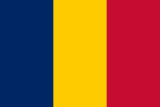
- description: three equal vertical bands of blue (left side), gold, and red
meaning: combines the blue and red French (former colonial) colors with the red and yellow Pan-African colors; blue stands for the sky, hope, and the south of the country; gold for the sun and the desert in the north; red for progress, unity, and sacrifice
Capital
- Name
- N'Djamena
- Etymology
- said to derive its name from a local word meaning "place of rest"
- Time difference
- UTC+1 (6 hours ahead of Washington, DC, during Standard Time)
- Geographic coordinates
- 12 06 N, 15 02 E
- Suffrage
- 18 years of age; universal
Citizenship
- Citizenship BY birth
- no
- Citizenship BY descent only
- both parents must be citizens of Chad
- Dual citizenship recognized
- Chadian law does not address dual citizenship
- Residency requirement for naturalization
- 15 years
Constitution
- History
- several previous; latest adopted by National Transitional Council 27 June 2023, approved by referendum 17 December, verified by Chad Supreme Court 28 December, promulgated 1 January 2024
- Amendment process
- previous process: proposed as a revision by the president of the republic after a Council of Ministers (cabinet) decision or by the National Assembly; approval for consideration of a revision requires at least three-fifths majority vote by the Assembly; passage requires approval by referendum or at least two-thirds majority vote by the Assembly
Country Name
- Note
- note: the only country whose name is composed of a single syllable with a single vowel
- Etymology
- named for Lake Chad, which lies along the country's western border; taken from a local word meaning "large body of water" or "lake"
- Local long form
- République du Tchad/Jumhuriyat Tshad
- Local short form
- Tchad/Tshad
- Conventional long form
- Republic of Chad
- Conventional short form
- Chad
- Independence
- 11 August 1960 (from France)
- Legal system
- mixed system of civil and customary law
- Government type
- presidential republic
Judicial Branch
- Highest court(s)
- Supreme Court (consists of the chief justice, 3 chamber presidents, and 12 judges or councilors and divided into 3 chambers); Supreme Council of the Judiciary (consists of the Judiciary president, vice president and 13 members)
- Subordinate courts
- High Court of Justice; Courts of Appeal; tribunals; justices of the peace
- Judge selection and term of office
- Supreme Court chief justice selected by the president; councilors - 8 designated by the president and 7 by the speaker of the National Assembly; chief justice and councilors appointed for life; Supreme Council of the Judiciary - with the exception of the Judiciary president and vice president, members are elected for single renewable 4-year terms
Executive Branch
- Cabinet
- Council of Ministers
- Chief of state
- President Mahamat Idriss DÉBY (since 6 May 2024)
- Election results
2024: Mahamat Idriss DÉBY elected president; percent of vote - Mahamat Idriss DÉBY (MPS) 61%, Succes MASRA (Transformers) 18.5%, Albert PADACKE 16.9%, other 3.6%- Head of government
- Prime Minister Allamaye HALINA (since 23 May 2024)
- Most recent election date
- 6 May 2024
- Election/appointment process
- president directly elected by absolute-majority popular vote in 2 rounds, if needed, for a 5-year term (no term limits)
- Expected date of next election
- TBD
- National holiday
- Independence Day, 11 August (1960)
- National color(s)
- blue, yellow, red
National Heritage
- Total world heritage sites
- 2 (1 natural, 1 mixed)
- Selected world heritage site locales
- Lakes of Ounianga (n); Ennedi Massif: Natural and Cultural Landscape (m)
- Political parties
- Chadian Convention for Peace and Development or CTPD
Federation Action for the Republic or FAR
National Rally for Development and Progress or Viva-RNDP
National Union for Democracy and Renewal or UNDR
Party for Unity and Reconstruction or PUR
Patriotic Salvation Movement or MPS
Rally for Democracy and Progress or RDP
Rally of Chadian Nationalists/Awakening or RNDT/Le Reveil
Social Democratic Party for a Change-over of Power or PDSA
Union for Democracy and the Republic or UDR
Union for Renewal and Democracy or URD
Transformers
Legislative Branch
- Legislature name
- Parliament
- Legislative structure
- bicameral
National Anthem(s)
- Title
- "La Tchadienne" (The Chadian)
- History
- adopted 1960
- Lyrics/music
- Louis GIDROL and his students/Paul VILLARD
- National symbol(s)
- goat (north), lion (south)
- Administrative divisions
- 23 provinces; Barh-El-Gazel, Batha, Borkou, Chari-Baguirmi, Ennedi-Est, Ennedi-Ouest, Guera, Hadjer-Lamis, Kanem, Lac, Logone Occidental, Logone Oriental, Mandoul, Mayo-Kebbi-Est, Mayo-Kebbi-Ouest, Moyen-Chari, N'Djamena, Ouaddai, Salamat, Sila, Tandjile, Tibesti, Wadi-Fira
Legislative Branch Lower Chamber
- Note
- note: the initial term of the National Assembly was previously established as five years; however the term length will be changed to six years in accordance with constitutional amendments adopted by a joint session of parliament and promulgated by the President of the Republic in October 2025; the date from which the new term is to apply will be decided at a later stage; if the new term of six years is applied to the National Assembly elected in 2024, the next elections will be held in 2030
- Chamber name
- National Assembly (National Assembly)
- Term in office
- 5 years
- Number of seats
- 188 (all directly elected)
- Electoral system
- mixed system
- Scope of elections
- full renewal
- Most recent election date
- 12/29/2024
- Expected date of next election
- December 2029
- Percentage of women in chamber
- 33.5%
- Parties elected and seats per party
- Patriotic Salvation Movement (MPS) (124); Rally of Chadian Nationalists/Awakening (RNDT/ Le Réveil) (12); Others (27); Other (25)
Legislative Branch Upper Chamber
- Note
- note: 46 of the Senate's 69 seats are determined by election, and the remaining 23 seats are appointed by the President
- Chamber name
- Senate (Senate)
- Term in office
- 6 years
- Number of seats
- 69 (46 indirectly elected; 23 appointed)
- Scope of elections
- full renewal
- Most recent election date
- 2/25/2025
- Expected date of next election
- February 2031
- Percentage of women in chamber
- 36.2%
- Parties elected and seats per party
- Patriotic Salvation Movement (MPS) (66); Other (3)
Diplomatic Representation in the US
- Fax
- [1] (202) 578-0431
- Chancery
- 2401 Massachusetts Avenue NW, Washington, DC 20008
- Telephone
- [1] (202) 652-1312
- Chief of mission
- Ambassador (vacant); Chargé d'Affaires ANWAR SADAT Fatahalbab (since 30 July 2025)
- Email address and website
info@chadembassy.us
https://chadembassy.us/
Diplomatic Representation from the US
- Fax
- [235] 2253-9102
- Embassy
- Rond-Point Chagoua, B.P. 413, N’Djamena
- Telephone
- [235] 6885-1065
- Mailing address
- 2410 N'Djamena Place, Washington DC 20521-2410
- Chief of mission
- Ambassador (vacant); Chargé d’Affaires William FLENS (since July 2025)
- Email address and website
NdjamenaACS@state.gov
https://td.usembassy.gov/
- International organisations
- ACP, AfDB, AU, BDEAC, CEMAC, EITI (compliant country), FAO, FZ, G-77, IAEA, IBRD, ICAO, ICCt, ICRM, IDA, IDB, IFAD, IFC, IFRCS, ILO, IMF, Interpol, IOC, IOM, IPU, ITSO, ITU, ITUC (NGOs), LCBC, MIGA, MNJTF, NAM, OIC, OIF, OPCW, UN, UNCTAD, UNESCO, UNIDO, UNOCI, UNOOSA, UNWTO, UPU, WCO, WHO, WIPO, WMO, WTO
- International law organization participation
- has not submitted an ICJ jurisdiction declaration; accepts ICCt jurisdiction
Legislature
CHAD · LOWER HOUSE
National Assembly
188 seats · hover a seat for the party
Total seats
188
Majority line
95
Largest party
Patriotic Salvation Movement (MPS)
Parties
9
All political parties
Upper house
CHAD · UPPER HOUSE
Senate
69 seats · hover a seat for the party
Total seats
69
Majority line
36
Largest party
Patriotic Salvation Movement
Parties
7
All political parties
Leaders
Current
Mahamat Déby
- Head of State
Economy
Budget
- Note
- note: central government revenues and expenses (excluding grants/extrabudgetary units/social security funds) converted to US dollars at average official exchange rate for year indicated
- Revenues
- $2.129 billion (2020 est.)
- Expenditures
- $2.15 billion (2020 est.)
Exports
- Civica canonical (reconciled)
- $5.8B
- Note
- note: GDP expenditure basis - exports of goods and services in current dollars
- Exports 2022
- $5.658 billion (2022 est.)
- Exports 2023
- $5.7 billion (2023 est.)
- Exports 2024
- $5.799 billion (2024 est.)
Imports
- Civica canonical (reconciled)
- $3.5B
- Note
- note: GDP expenditure basis - imports of goods and services in current dollars
- Imports 2022
- $2.898 billion (2022 est.)
- Imports 2023
- $3.271 billion (2023 est.)
- Imports 2024
- $3.557 billion (2024 est.)
- Industries
- oil, cotton textiles, brewing, natron (sodium carbonate), soap, cigarettes, construction materials
- Labor force
- 6.6 million (2024 est.)
Public Debt
- Civica canonical (reconciled)
- 52.4% of GDP (2016 est.)
- Public debt 2016
- 52.4% of GDP (2016 est.)
Remittances
- Note
- note: personal transfers and compensation between resident and non-resident individuals/households/entities
- Remittances 2021
- 0% of GDP (2021 est.)
- Remittances 2022
- 0% of GDP (2022 est.)
- Remittances 2023
- 0% of GDP (2023 est.)
Exchange Rates
- Currency
- Cooperation Financiere en Afrique Centrale francs (XAF) per US dollar -
- Exchange rates 2020
- 575.586 (2020 est.)
- Exchange rates 2021
- 554.531 (2021 est.)
- Exchange rates 2022
- 623.76 (2022 est.)
- Exchange rates 2023
- 606.57 (2023 est.)
- Exchange rates 2024
- 606.345 (2024 est.)
Debt External
- Note
- note: present value of external debt in current US dollars
- Debt external 2023
- $2.286 billion (2023 est.)
- Economic overview
- oil-dependent economy challenged by market fluctuations, regional instability, refugee influx, and climate vulnerability; high levels of extreme poverty and food insecurity; recent growth driven by oil and agricultural recovery; debt-restructuring agreement under G20 Common Framework
Unemployment Rate
- Civica canonical (reconciled)
- 1.1%
- Note
- note: % of labor force seeking employment
- Unemployment rate 2022
- 1.1% (2022 est.)
- Unemployment rate 2023
- 1.1% (2023 est.)
- Unemployment rate 2024
- 1.1% (2024 est.)
- Exports partners
- UAE 26%, China 19%, Germany 17%, Netherlands 13%, France 10% (2023)
- Imports partners
- China 28%, UAE 23%, Turkey 10%, France 9%, India 5% (2023)
Real GDP Per Capita
- Civica canonical (reconciled)
- $2,743
- Note
- note: data in 2021 dollars
- Real GDP per capita 2022
- $2,700 (2022 est.)
- Real GDP per capita 2023
- $2,600 (2023 est.)
- Real GDP per capita 2024
- $2,600 (2024 est.)
Real GDP Growth Rate
- Civica canonical (reconciled)
- 4.2%
- Note
- note: annual GDP % growth based on constant local currency
- Real GDP growth rate 2022
- 12.9% (2022 est.)
- Real GDP growth rate 2023
- 4.1% (2023 est.)
- Real GDP growth rate 2024
- 3.7% (2024 est.)
- Agricultural products
- sorghum, groundnuts, millet, beef, cereals, yams, sugarcane, maize, cassava, milk (2023)
- Exports commodities
- crude petroleum, gold, oil seeds, gum resins, cotton (2023)
- Imports commodities
- jewelry, broadcasting equipment, packaged medicine, cars, refined petroleum (2023)
- GDP (official exchange rate)
- $20.626 billion (2024 est.)
GDP Composition, BY End Use
- Note
- note: figures may not total 100% due to rounding or gaps in data collection
- Household consumption
- 61.3% (2024 est.)
- Government consumption
- 8.7% (2024 est.)
- Investment in inventories
- 3.4% (2024 est.)
- Investment in fixed capital
- 14.4% (2024 est.)
- Exports of goods and services
- 28.1% (2024 est.)
- Imports of goods and services
- -17.2% (2024 est.)
- Population below poverty line
- 44.8% (2022 est.)
Inflation Rate (Consumer Prices)
- Civica canonical (reconciled)
- 8.9%
- Note
- note: annual % change based on consumer prices
- Inflation rate (consumer prices) 2022
- 5.8% (2022 est.)
- Inflation rate (consumer prices) 2023
- 10.8% (2023 est.)
- Inflation rate (consumer prices) 2024
- 8.9% (2024 est.)
- Industrial production growth rate
- 5.1% (2024 est.)
Real GDP (Purchasing Power Parity)
- Civica canonical (reconciled)
- $52.895 billion (2024 est.)
- Note
- note: data in 2021 dollars
- Real GDP (purchasing power parity) 2022
- $49.012 billion (2022 est.)
- Real GDP (purchasing power parity) 2023
- $51.03 billion (2023 est.)
- Real GDP (purchasing power parity) 2024
- $52.895 billion (2024 est.)
Youth Unemployment Rate (Ages 15 24)
- Male
- 2.1% (2024 est.)
- Note
- note: % of labor force ages 15-24 seeking employment
- Total
- 1.5% (2024 est.)
- Female
- 0.7% (2024 est.)
Reserves of Foreign Exchange and Gold
- Note
- note: holdings of gold (year-end prices)/foreign exchange/special drawing rights in current dollars
- Reserves of foreign exchange and gold 2021
- $211.591 million (2021 est.)
- Reserves of foreign exchange and gold 2022
- $1.013 billion (2022 est.)
- Reserves of foreign exchange and gold 2023
- $1.05 billion (2023 est.)
GDP Composition, BY Sector of Origin
- Note
- note: figures may not total 100% due to non-allocated consumption not captured in sector-reported data
- Industry
- 29.7% (2024 est.)
- Services
- 31.6% (2024 est.)
- Agriculture
- 32.2% (2024 est.)
Household Income or Consumption BY Percentage Share
- Note
- note: % share of income accruing to lowest and highest 10% of population
- Lowest 10%
- 2.8% (2022 est.)
- Highest 10%
- 29.5% (2022 est.)
Gini Index Coefficient Distribution of Family Income
- Note
- note: index (0-100) of income distribution; higher values represent greater inequality
- Gini index coefficient distribution of family income 2022
- 37.4 (2022 est.)
Energy
Coal
- Imports
- 20 metric tons (2023 est.)
Petroleum
- Total petroleum production
- 124,000 bbl/day (2023 est.)
- Crude oil estimated reserves
- 1.5 billion barrels (2021 est.)
- Refined petroleum consumption
- 15,000 bbl/day (2023 est.)
Electricity
- Consumption
- 282.103 million kWh (2023 est.)
- Installed generating capacity
- 167,000 kW (2023 est.)
- Transmission/distribution losses
- 109.04 million kWh (2023 est.)
Electricity Access
- Electrification rural areas
- 1.3%
- Electrification urban areas
- 46.3%
- Electrification total population
- 11.7% (2022 est.)
Energy Consumption Per Capita
- Total energy consumption per capita 2023
- 1.502 million Btu/person (2023 est.)
Electricity Generation Sources
- Wind
- 2.3% of total installed capacity (2023 est.)
- Solar
- 0.8% of total installed capacity (2023 est.)
- Fossil fuels
- 94.3% of total installed capacity (2023 est.)
- Biomass and waste
- 2.6% of total installed capacity (2023 est.)
Communications
Internet Users
- Percent of population
- 13% (2023 est.)
- Broadcast media
- 1 state-owned TV station; 2 privately-owned TV stations; state-owned radio network, Radiodiffusion Nationale Tchadienne (RNT), operates national and regional stations; over 10 private radio stations; some stations rebroadcast programs from international broadcasters (2017)
- Internet country code
- .td
Telephones Fixed Lines
- Total subscriptions
- (2024 est.) The telephone system is down. No data is available for the year 2024.
- Subscriptions per 100 inhabitants
- (2024 est.) The telephone system is down. No data is available for the year 2024.
Telephones Mobile Cellular
- Total subscriptions
- 14.8 million (2024 est.)
- Subscriptions per 100 inhabitants
- 73 (2024 est.)
Broadband Fixed Subscriptions
- Total
- 0 (2022 est.)
- Subscriptions per 100 inhabitants
- (2022 est.) less than 1
Transport
- Airports
- 44 (2025)
- Civil aircraft registration country code prefix
- TT
Environment
- Climate
- tropical in south, desert in north
Land Use
- Other
- 57% (2023 est.)
- Forest
- 3.1% (2023 est.)
- Agricultural land
- 40% (2023 est.)
- Agricultural land: arable land
- arable land: 4.2% (2023 est.)
- Agricultural land: permanent crops
- permanent crops: 0% (2023 est.)
- Agricultural land: permanent pasture
- permanent pasture: 35.7% (2023 est.)
Urbanization
- Urban population
- 24.4% of total population (2023)
- Rate of urbanization
- 4.1% annual rate of change (2020-25 est.)
Methane Emissions
- Other
- 12 kt (2019-2021 est.)
- Waste
- 60.3 kt (2019-2021 est.)
- Energy
- 101.8 kt (2022-2024 est.)
- Agriculture
- 1,282.9 kt (2019-2021 est.)
Waste and Recycling
- Municipal solid waste generated annually
- 1.359 million tons (2024 est.)
- Percent of municipal solid waste recycled
- 11.1% (2022 est.)
- Environmental issues
- inadequate supplies of potable water; soil and water pollution from improper waste disposal in rural areas and poor farming practices; desertification
Total Water Withdrawal
- Municipal
- 103.7 million cubic meters (2022 est.)
- Industrial
- 103.7 million cubic meters (2022 est.)
- Agricultural
- 672.2 million cubic meters (2022 est.)
Carbon Dioxide Emissions
- Total emissions
- 2.054 million metric tonnes of CO2 (2023 est.)
- From coal and metallurgical coke
- 2 metric tonnes of CO2 (2023 est.)
- From petroleum and other liquids
- 2.054 million metric tonnes of CO2 (2023 est.)
- Particulate matter emissions
- 41.2 micrograms per cubic meter (2019 est.)
- Total renewable water resources
- 45.7 billion cubic meters (2022 est.)
International Environmental Agreements
- Party to
- Biodiversity, Climate Change, Climate Change-Kyoto Protocol, Climate Change-Paris Agreement, Comprehensive Nuclear Test Ban, Desertification, Endangered Species, Hazardous Wastes, Law of the Sea, Nuclear Test Ban, Ozone Layer Protection, Wetlands
- Signed, but not ratified
- Marine Dumping-London Convention
Military & Security
- Military note
- internal security is the primary focus of the Chadian National Army, and it is actively engaged in counterinsurgency operations against multiple terrorist and rebel groups; the terrorist groups Boko Haram and Islamic State of Iraq and ash-Sham in West Africa operate in the Lake Chad Basin area; meanwhile, a number of anti-government militias operate in northern Chad, some from bases in southern Libya, including the FACT (Front pour le Changement et la Concorde au Tchad), the Military Command Council for the Salvation of the Republic (le Conseil de Commandement Militaire pour le salut de la République or CCSMR), the Union of Forces for Democracy and Development (le Union des Forces pour la Démocratie et le Développement or UFDD), and the Union of Resistance Forces (le Union des Forces de la Résistance UFR); former Chadian President Idriss DEBY was killed in April 2021 during fighting between the FACT and government forces (2025)
- Military deployments
- note: Chad has committed approximately 1,000-1,500 troops to the Multinational Joint Task Force (MNJTF) against Boko Haram and other terrorist groups operating in the general area of the Lake Chad Basin and along Nigeria's northeast border; national MNJTF troop contingents are deployed within their own territories, although cross‐border operations are conducted periodically
Military Expenditures
- Civica canonical (reconciled)
- 3.0%
- Military expenditures 2020
- 2.9% of GDP (2020 est.)
- Military expenditures 2021
- 2.5% of GDP (2021 est.)
- Military expenditures 2022
- 2.6% of GDP (2022 est.)
- Military expenditures 2023
- 2.9% of GDP (2023 est.)
- Military expenditures 2024
- 3% of GDP (2024 est.)
- Military and security forces
- Chadian National Army (Armee Nationale du Tchad, ANT): Ground Forces (l'Armee de Terre, AdT), Chadian Air Force (l'Armee de l'Air Tchadienne, AAT), Chadian National Gendarmerie; General Direction of the Security Services of State Institutions (Direction Generale des Services de Securite des Institutions de l'Etat, GDSSIE)
Ministry of Public Security and Immigration: National Nomadic Guard of Chad (GNNT) (2025) - Military service age and obligation
- 18-25 for voluntary service; men subject to 18-36 months of compulsory service at age 20; women are subject to 12 months of compulsory military or civic service at age 21 (2025)
- Military equipment inventories and acquisitions
- the ANT has a mix of older, secondhand, and some more modern armaments from a variety of suppliers, including Brazil, China, France, Russia/former Soviet Union, Türkiye, Ukraine, and the UAE (2025)
- Military and security service personnel strengths
- estimated 35-40,000 active Chadian National Army personnel (2025)
Terrorism
- Terrorist group(s)
- Boko Haram; Islamic State of Iraq and ash-Sham - West Africa (ISIS-WA)
Transnational Issues
Trafficking in Persons
- Tier rating
- Tier 3 — Chad does not fully meet the minimum standards for the elimination of trafficking and is not making significant efforts to do so, therefore, Chad was downgraded to Tier 3; for more details, go to: https://www.state.gov/reports/2025-trafficking-in-persons-report/chad/
Refugees and Internally Displaced Persons
- Idps
- 1,542,532 (2024 est.)
- Refugees
- 1,286,645 (2024 est.)
Scores & Rankings
ScoreValueGlobal rankTrendAs of
Civica Index14.0 / 100as of 2024-Q4174 / 1902024-Q4
V-Dem Liberal Democracy0.05as of 2024-Q4153 / 1702024-Q4
Freedom House StatusNot Free (8/100)as of 2024-Q4—2024-Q4
Press Freedom (RSF)Partly free (50/100)as of 2024—2024
Human Development Index0.394as of 2022—2022
Cite this page
Cite this page
Civica. (2026). Civica Atlas — Chad — vintage 2026-Q1: Chad factbook. Civica Atlas. Retrieved May 7, 2026, from https://civicaatlas.org/factbook/chad
Sources: FAO FAOSTAT, ILO ILOSTAT, IMF (WEO), UN Statistics Division, UNDP HDR, UNESCO Institute for Statistics, V-Dem, WHO Global Health Observatory, World Bank, WTO Stats, CIA World Factbook, Wikidata